

Let’s start with the obvious: the stolen goods.
Whether it’s a register, a laptop, or a piece of equipment, the average loss from stolen property in a commercial burglary lands around $2,400. Painful, but survivable. The problem is that’s just the opening act.
What Actually Gets Taken First
In 2023, more than 42,500 commercial properties and office buildings were burglarized across the United States — and that’s before you count restaurants (23,358 incidents), construction sites (12,979), and convenience stores (12,397). The sheer volume of these incidents has forced a lot of business owners to reckon with a question they’d rather not ask: What would this actually cost me?
The answer is almost always more than they expect.
The Hidden Costs Nobody Talks About
Here’s where it gets expensive.
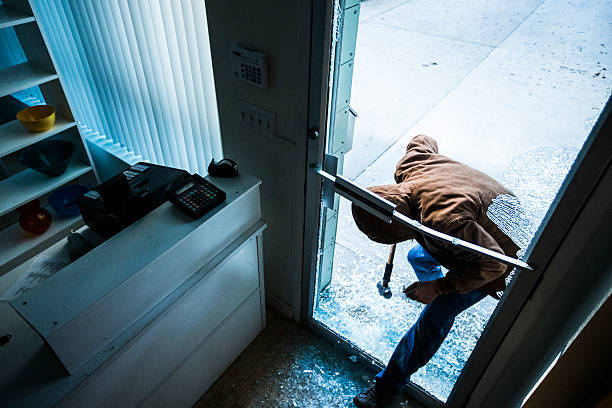
About 95% of burglaries involve forceful entry — broken doors, shattered glass, and damaged locks — meaning physical damage is nearly guaranteed, according to data compiled by The Zebra. Before you can unlock your front door for customers the next morning, you need a contractor. And contractors don’t work for free.
Then comes the insurance claim. Filing one sounds like relief — until your premium quietly climbs at renewal. Insurers evaluate local crime rates and claim history when setting rates, and a burglary claim raises your risk profile. Then comes the time: police reports, inventory audits, contractor calls, staff conversations, and so forth. None of that shows up on a single invoice, but all of it costs you something real.
The Real Number: $15,000

When businesses tally up both the direct and indirect costs — stolen property, property damage, increased insurance premiums, lost hours, temporary closures, and staff disruption — the average commercial burglary incident runs around $15,000 in total impact.
For a business running on tight margins, $15,000 isn’t just a bad week. It could be a month of payroll. It could be the equipment upgrade you’d been saving toward. It could be the difference between a profitable quarter and a loan you didn’t want to take out.
Where Camera Systems Change the Math
A quality commercial camera system typically runs anywhere from $3,000 on the low end to $10,000 or more for a comprehensive setup with multiple angles, night vision, modern technology. That sounds like a significant investment — until you put it next to a $15,000 burglary incident.
But deterrence is really the headline here.
Research from the University of North Carolina at Charlotte — which surveyed more than 400 convicted burglars — found that about 60% said they would avoid a property with visible security systems, including cameras. A separate study found that 50% said they would abort a burglary mid-attempt upon discovering surveillance equipment. An Urban Institute analysis of public surveillance in Baltimore, Washington D.C., and Chicago found that in actively monitored areas, crime dropped by as much as 20%.
Properties with visible cameras can see up to a 67% reduction in break-ins. The deterrent effect is real, documented, and significant.
You can read more about how ICU Security increases deterrence with camera systems.
It’s Not Just About Stopping the Break-In
Even when a camera system doesn’t prevent an incident, it changes the outcome.
Clear surveillance footage dramatically improves the chances of identifying a suspect — which matters both for recovering stolen property and for any insurance investigation. Law enforcement agencies have consistently said that access to quality surveillance footage makes cases significantly easier to investigate and prosecute.
Cameras also matter for disputes that have nothing to do with burglary: slip-and-fall liability claims, employee misconduct, vendor disputes. A commercial camera system is infrastructure that pays dividends across multiple categories of business risk.
The Insurance Angle Nobody Mentions

Here’s the flip side of the insurance conversation: many commercial property insurers offer premium discounts for businesses with documented security systems. That means a camera system doesn’t just reduce the risk of filing a claim — it can actively reduce what you’re already paying for coverage.
One incident that doesn’t happen is one deductible you don’t pay, one rate increase that doesn’t hit at renewal, and one operational disruption that never costs you a week of productivity.
Doing the Math
Let’s put it plainly:
- Average total cost of a commercial burglary: ~$15,000
- Odds police solve it: ~13.5%
- Odds a burglar avoids a camera-equipped property: ~60%
- Cost of a solid commercial camera system: $3,000–$10,000
A $10,000 camera system doesn’t look like an expense when you frame it that way. It looks like insurance. And unlike an actual insurance claim, it doesn’t raise your rates — it helps make sure you never have to file one in the first place.
The math isn’t complicated. The only question is whether you want to run it before or after something happens.